What Visitors Notice in Your Home That You Stopped Seeing
The smell when someone first walks in
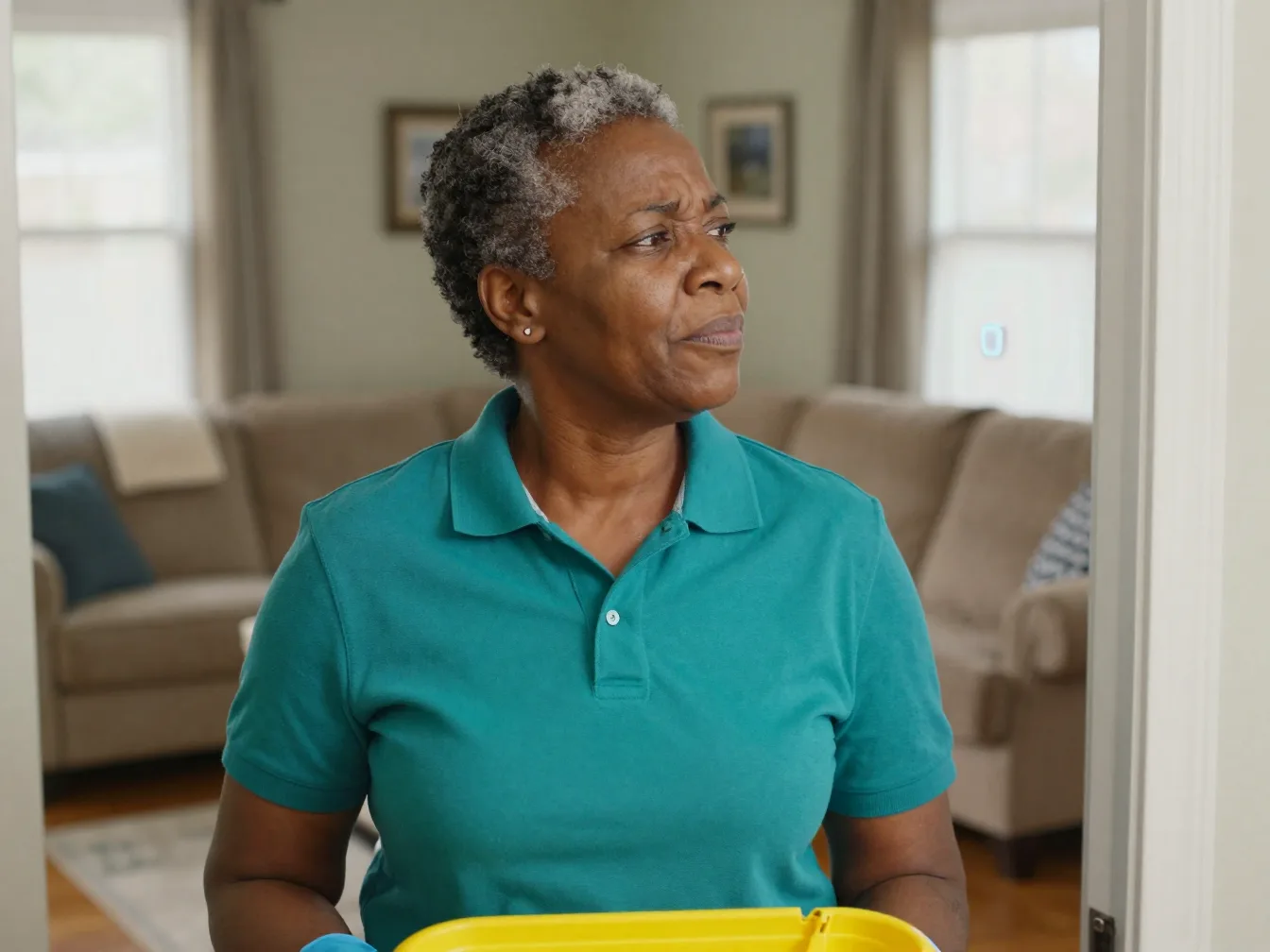
A cleaner registers the air before anything else. Mona Murahwa, founder of Cleaning Mama in Salt Lake City, told Good Housekeeping that a clear odor may mean the owners have gone nose blind to something that turned slowly: pets, the trash can, vents, a spill hardened at the back of the fridge.
Pamela Dalton, a cognitive psychologist at the Monell Chemical Senses Center, told The Cut that receptors switch off to a harmless smell after about two breaths. In her 1996 study with Wysocki (Perception & Psychophysics), people who lived with one test odor at home for two weeks came out less sensitive to it.
What stays constant stops registering for you.
The first few feet inside the entrance
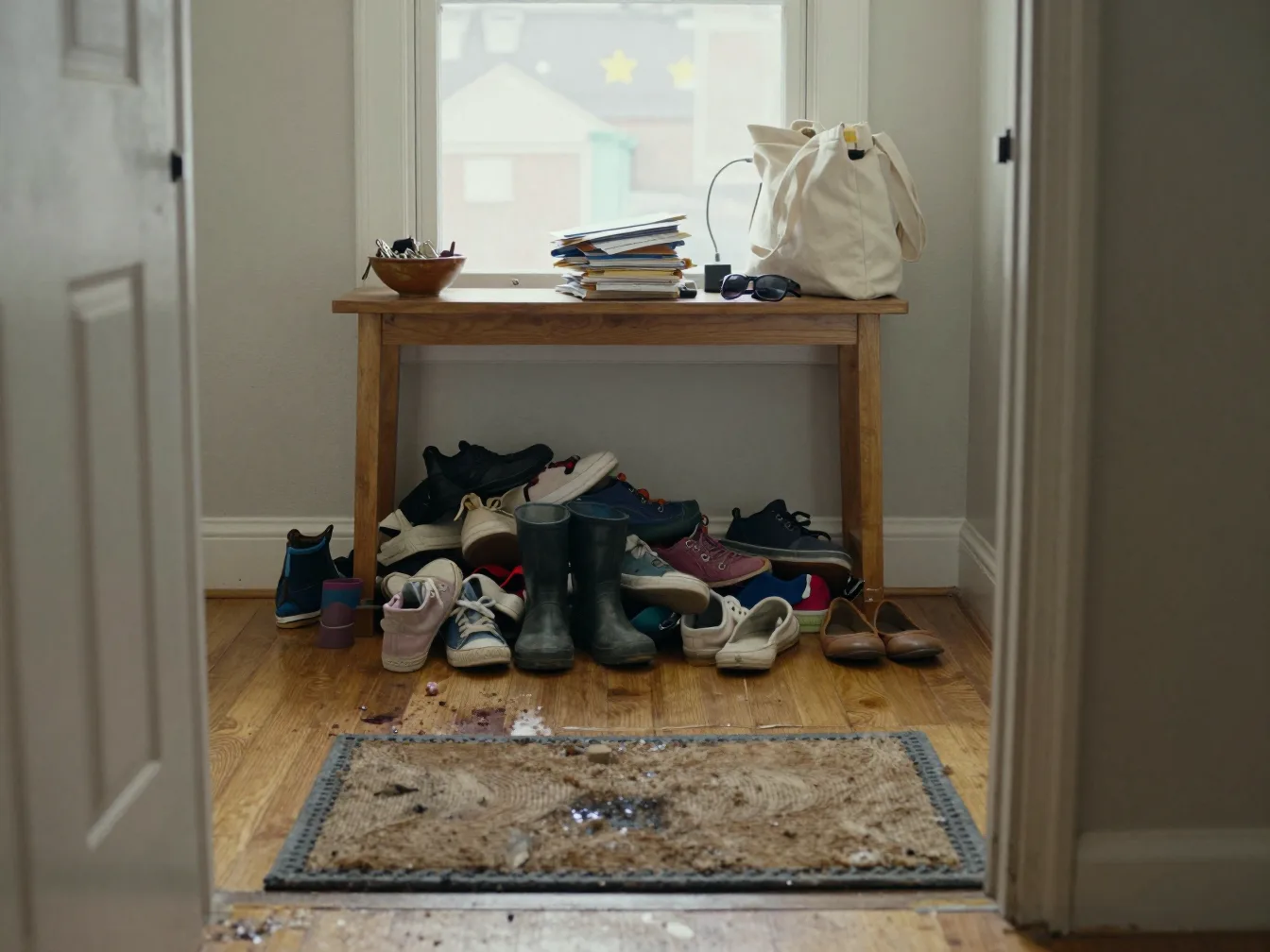
Guests take in the hall before they see the living room you cleaned for them. Angela Gammon, who owns a cleaning service in Charleston, S.C., told Southern Living that this first stretch inside gets overlooked, and a scuffed floor or grimy mat there is what people see first.
Organizers read clutter in that spot as a setup problem. Keys, mail, shoes and chargers scattered on the landing mean those things have no assigned home, says Tonia Tomlin of Sorted Out in Dallas. Surfaces become catch-alls when storage is missing or awkward, adds Lavender Menakaya of Lavender Organizes.
That is the organizers’ reading: a gap in how the home is set up. Stand on your own mat and look.
What the guest bathroom looks like sitting down
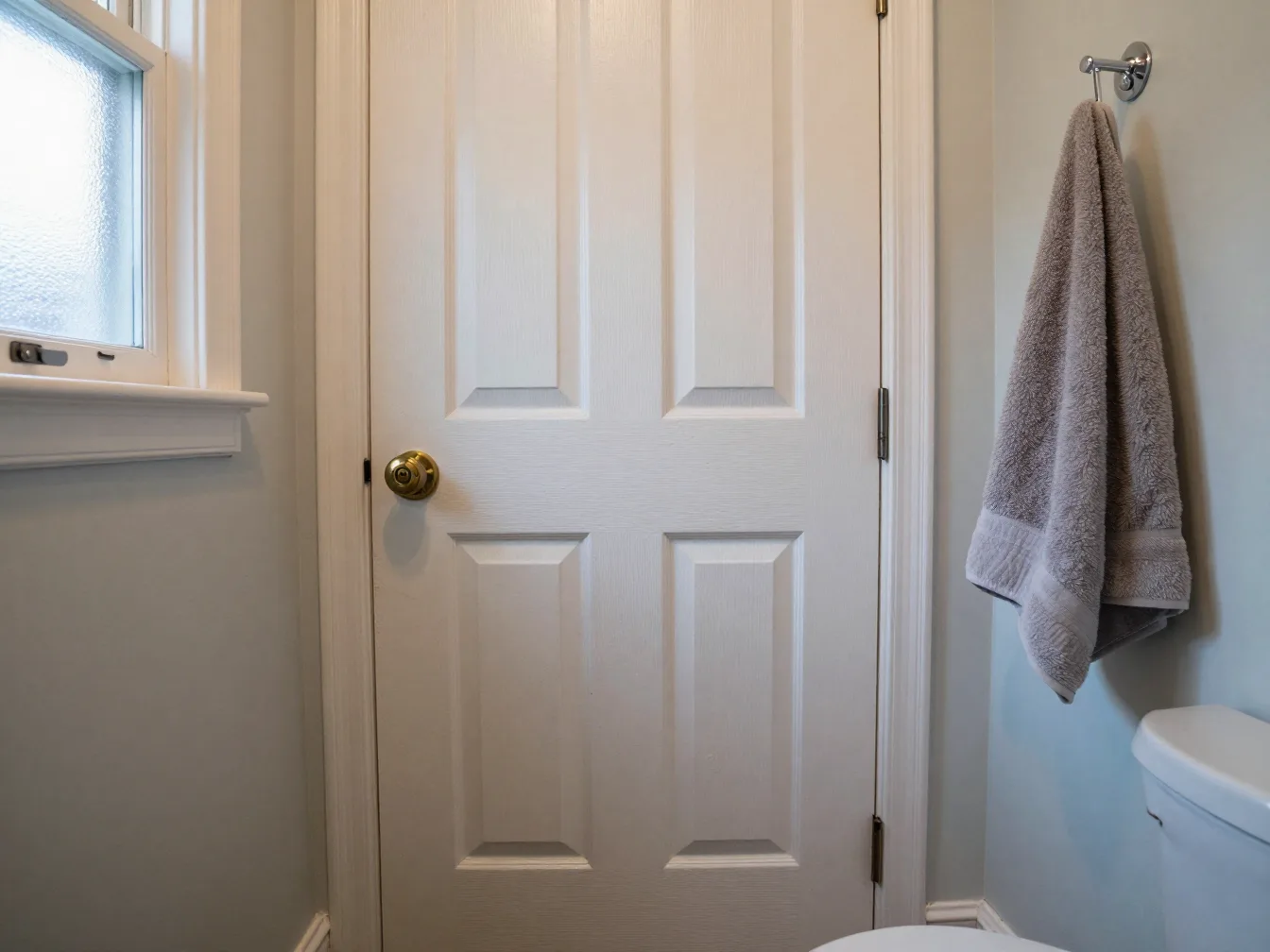
You clean the guest bathroom standing up, with everything wide open. Your guest uses it sitting down, shut in. Todd Fredericksen, co-owner of The Valley Clean Team, told Southern Living that the inside face of that closing panel gets missed because it sits pushed against the wall while you clean. For the guest it is the only thing in view: dusty ledges, fingerprints around the lock.
Terry Klymkiv of Alpha Cleaning Company adds the seam where the toilet meets the floor. Guests notice it, he says, even if they never mention it.
Jacqueline Stein of Your Home Reimagined in Austin suggests sitting in there for 30 seconds and looking around.
Light switches and cabinet handles
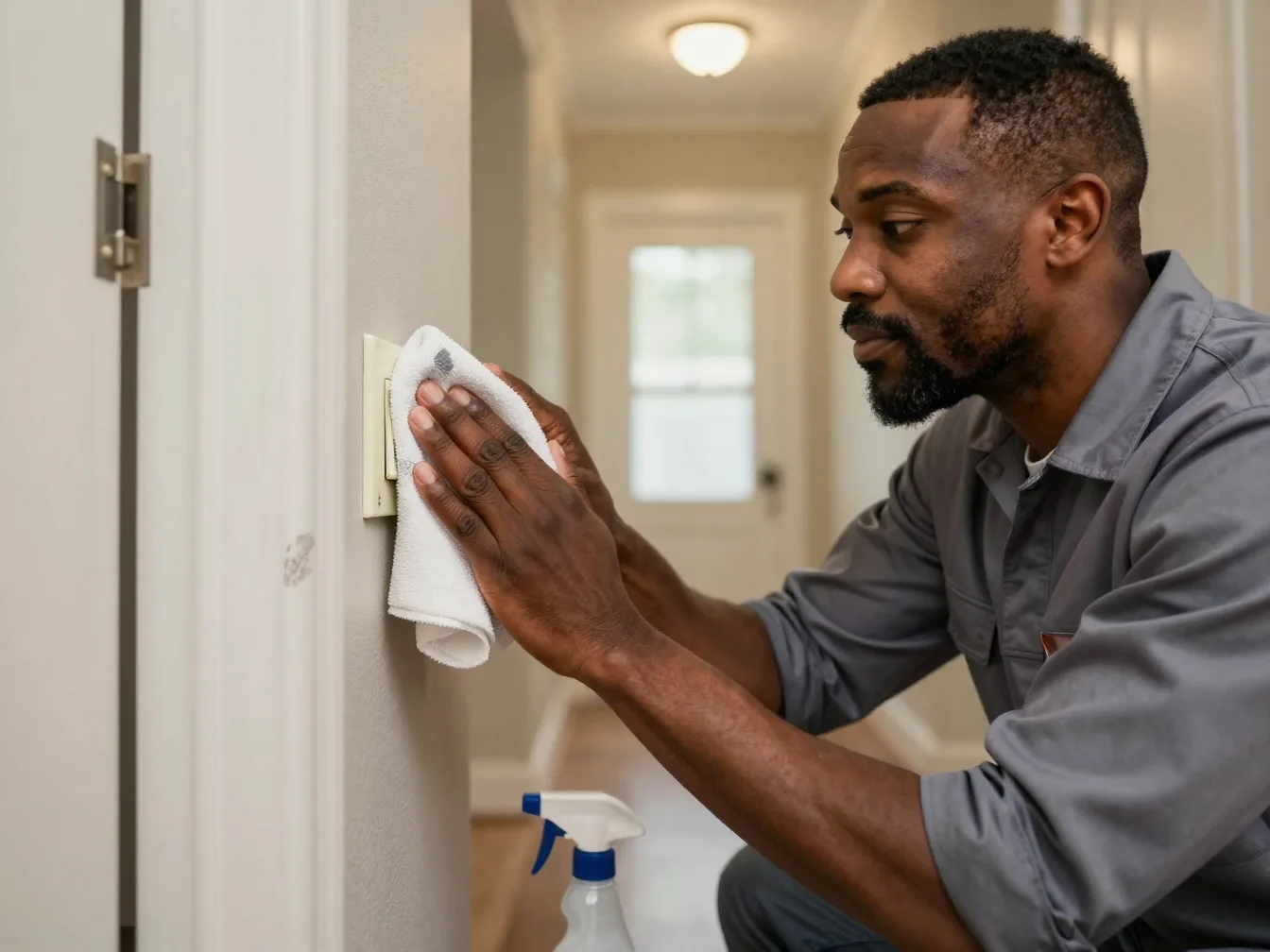
A cleaner looks at what hands touch. Alicia Sokolowski, president and co-CEO of AspenClean, told Good Housekeeping that switches, handles and frame edges are among the first things her crews notice, and they sit outside your line of sight. “It’s the areas that are least noticed that tell us the most.”
Murahwa adds ceiling fans and vents, where dust and pet hair build up. To her, dirty ones mean nobody thought to clean them, which is common.
That is a trained eye. A dinner guest may never glance at the switch plate, and the sources say nothing about how many guests do.
Towels that feel stiff or waxy
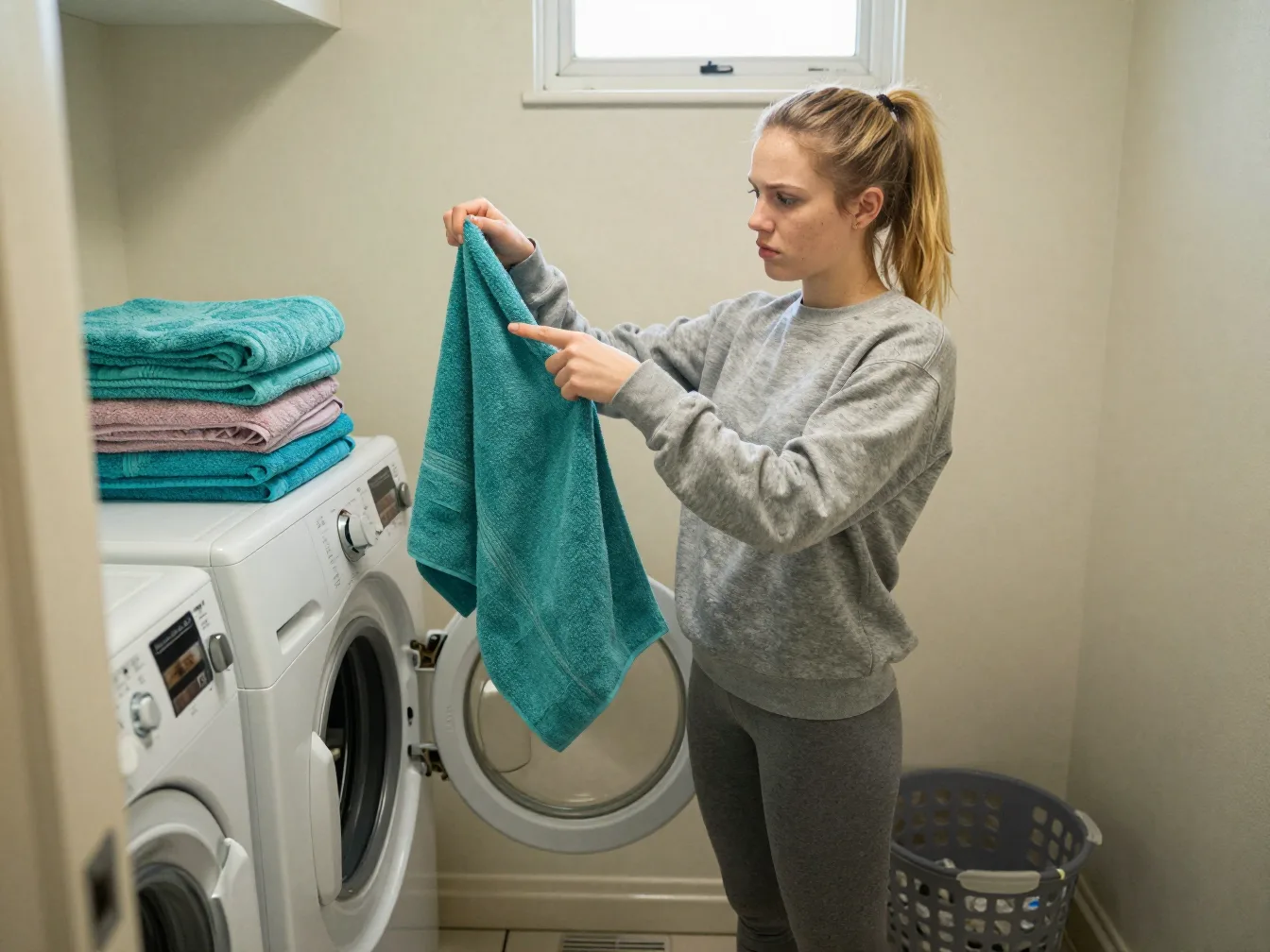
A guest dries her hands and the towel feels waxy, or it pushes the water around instead of soaking it up. Sokolowski reads that as detergent or fabric softener residue coating the fibers. Good Housekeeping notes this usually comes from too much care, not too little.
So the tell points at the laundry routine. Noah Pinsonnault of the Good Housekeeping Institute’s Home Care & Cleaning Lab suggests skipping the softener and washing whites in hot water, colors in warm.
Take the hand towel from the guest bathroom and feel it as if it belonged to somebody else.
Bags and mail on their way somewhere else
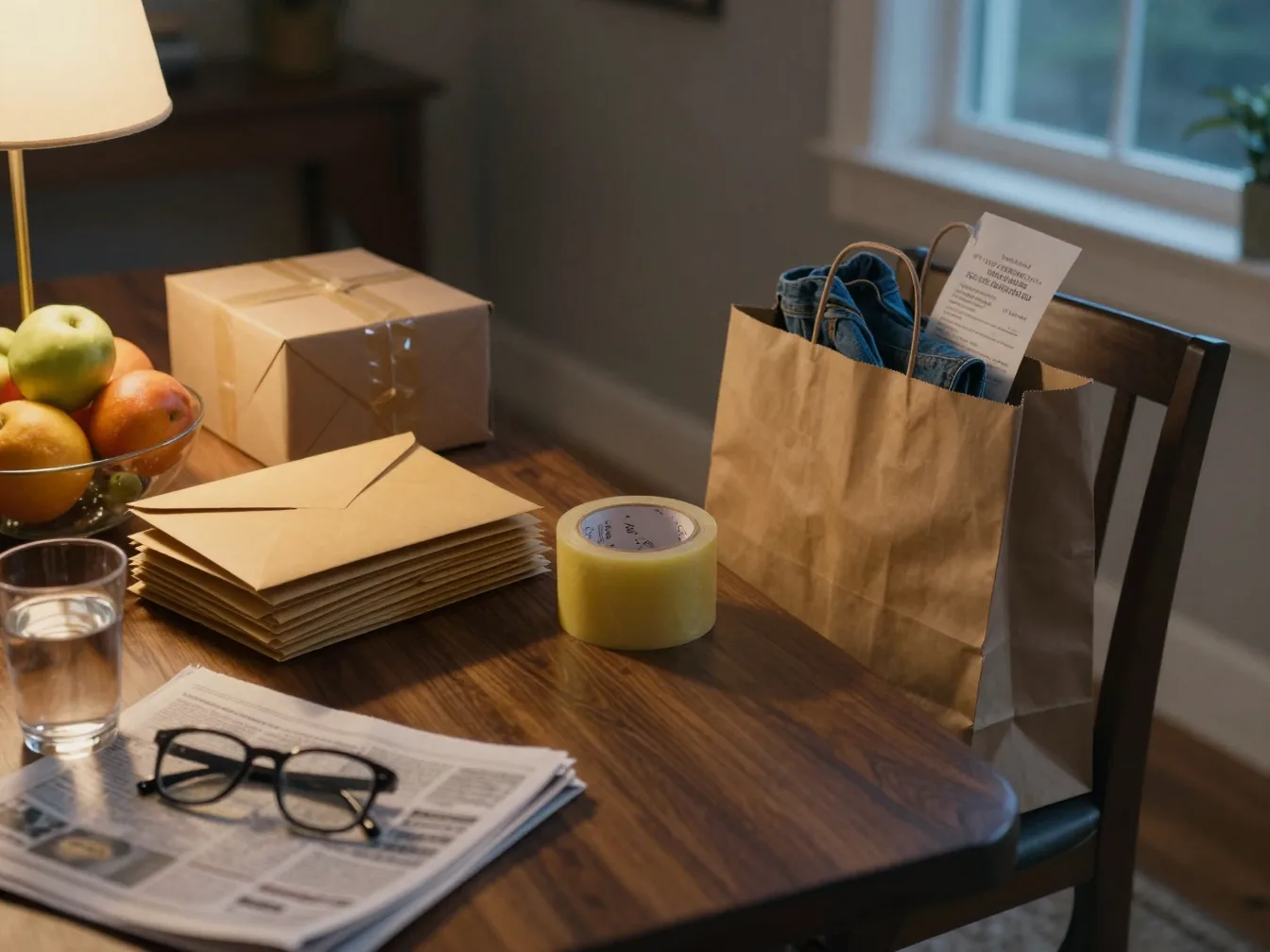
A shopping bag of returns at the foot of the stairs. A parcel to post, still on the hall table after a week. Emma Kenwrick-Meehan of Home Nip & Tuck told Good Housekeeping UK she calls this transitional clutter: things headed elsewhere that never quite arrive, sitting in plain sight as reminders of unfinished jobs.
Jo Jacob of Benella Home Organisation reads a pile of unopened mail as a hint there may be no system for handling the daily post.
Both describe a gap in routines. Kenwrick-Meehan says she rarely walks into a home and decides the person is messy; she looks for spots where the house makes daily life harder than it needs to be.
The warning you give every new visitor

Jiggle the handle after you flush. Don’t sit on that one. Plenty of homes have a line like this, said so often it comes out before the guest has a coat off.
Give an awkward thing long enough and it stops feeling like a problem. It becomes part of how the household runs. You no longer see the wobbly chair; you see a guest heading for it and steer them away. The visitor takes in both the fault and the workaround.
Can you name one thing you warn each newcomer about? If everything awkward has been fixed or hauled off, this one doesn’t apply. The warning is also a courtesy.
What a whole room tells a stranger

Sam Gosling and colleagues tested this in two studies (Journal of Personality and Social Psychology, 2002). Untrained student observers judged 94 offices, and in a second study student-housing rooms, without meeting the occupants. They largely agreed with each other, which is different from being right. Accuracy was modest: tidier offices went with somewhat more conscientious occupants. Gosling has also said people overread neatness, and that a single object means little.
Dalton says coming home from a trip is the chance to smell the place fresh; Holly Blakey of Breathing Room suggests photographing a room and looking at it as if for the first time. Dalton adds that in her work, worry seemed to slow adaptation. She said that probably counts for worry about your own home’s smell too.