Is Your Phone Making You Look Rude at the Counter?
Still on the call when you reach the front
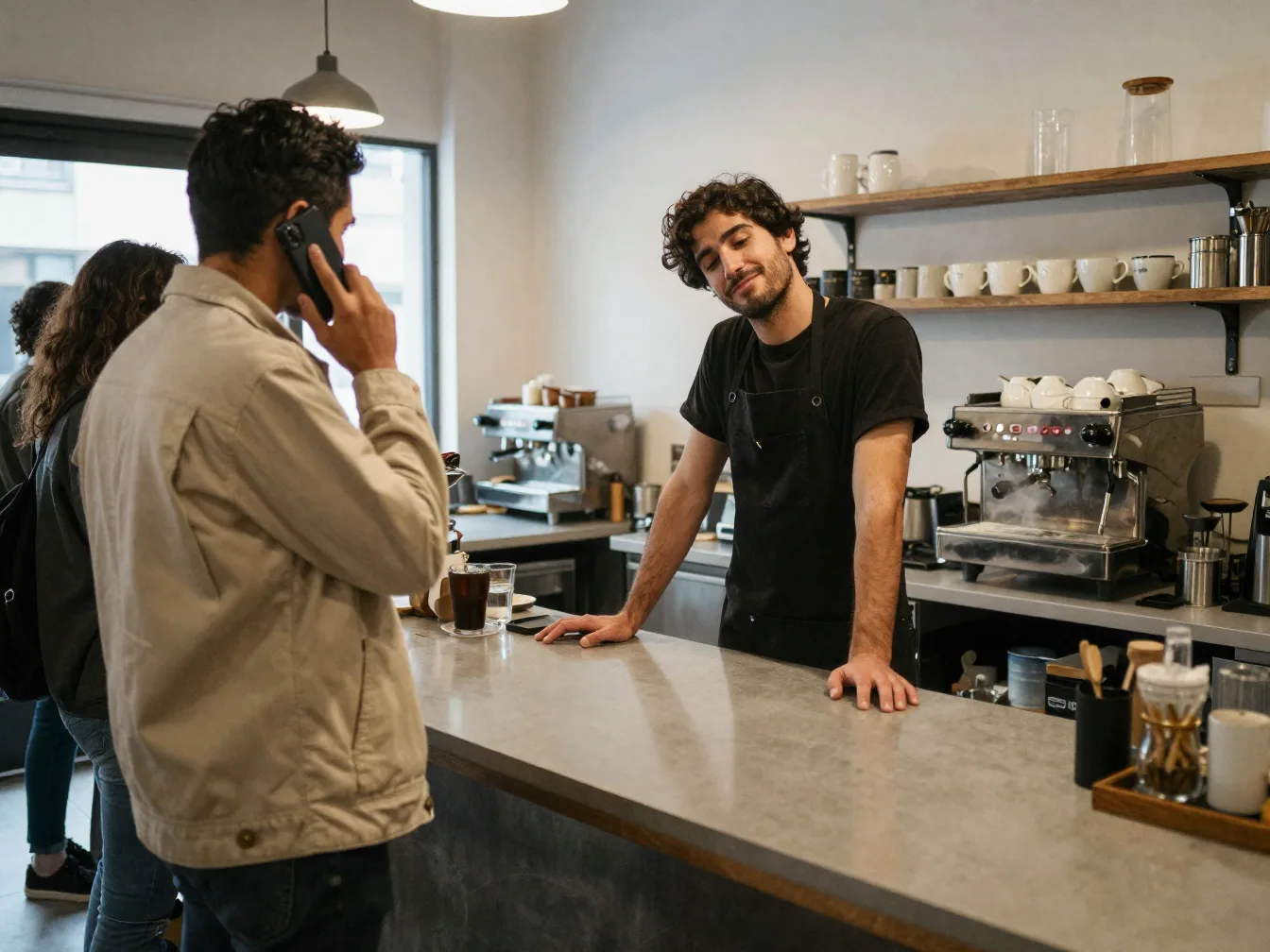
The cashier says hello to the side of a head. Yes, that can read as rude. In a survey of 2,940 frontline employees in Swedish retail stores, Fellesson and Salomonson (2020, Journal of Retailing and Consumer Services) found customers looking at phones instead of at staff is common. Many employees say it leaves them feeling ignored and makes good service harder to give.
The verdict is about that moment. Margarette Coleman, founder of Everyday Manners, writes in her etiquette column for The Citizen in Georgia that a call while you wait isn't necessarily a problem. Staying on it while the cashier helps you is.
Your last five visits: how often were you mid-call at hello?
A glance down while the cashier is talking
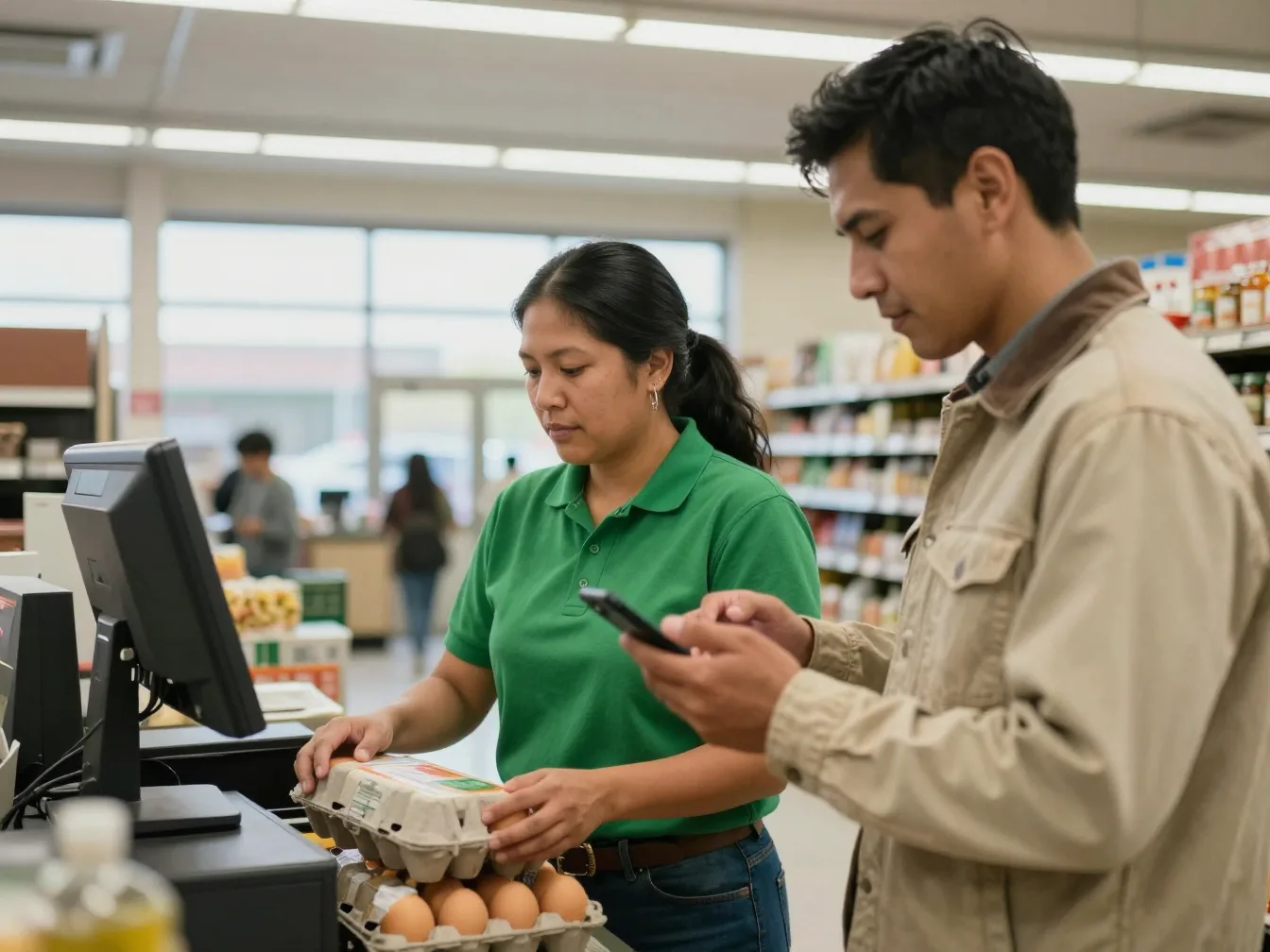
She reads the total; your eyes drop to the screen. From her side, a text that just arrived and one you went looking for look the same.
To onlookers they aren't. Vanden Abeele, Antheunis and Schouten (2016, Computers in Human Behavior) ran two experiments on messaging during a face-to-face conversation. The person who messaged was rated significantly less polite and less attentive, and messaging started on their own drew harsher impressions than replying to a notification. The observers were judging a conversation partner, though.
So the glance costs something, and the buzz-first glance costs less. Last time, did the phone buzz first, or did you pick it up?
Answers that come a beat late

The cashier asks if you need a bag. Nothing. She asks again, and the answer comes in a flat voice from someone standing very still.
Aagaard (2016, AI & Society), an interview study of Danish students, found that when someone was present but absorbed in a phone, what made the exchange feel off was delayed responses, mechanical intonation, a motionless body and missing eye contact, which read as indifference. That was about conversation partners; a thirty-second sale is a stretch.
A slow answer can also mean a loud shop or a soft voice. So count instead: how often does a cashier have to ask you something twice?
An earbud in at the register
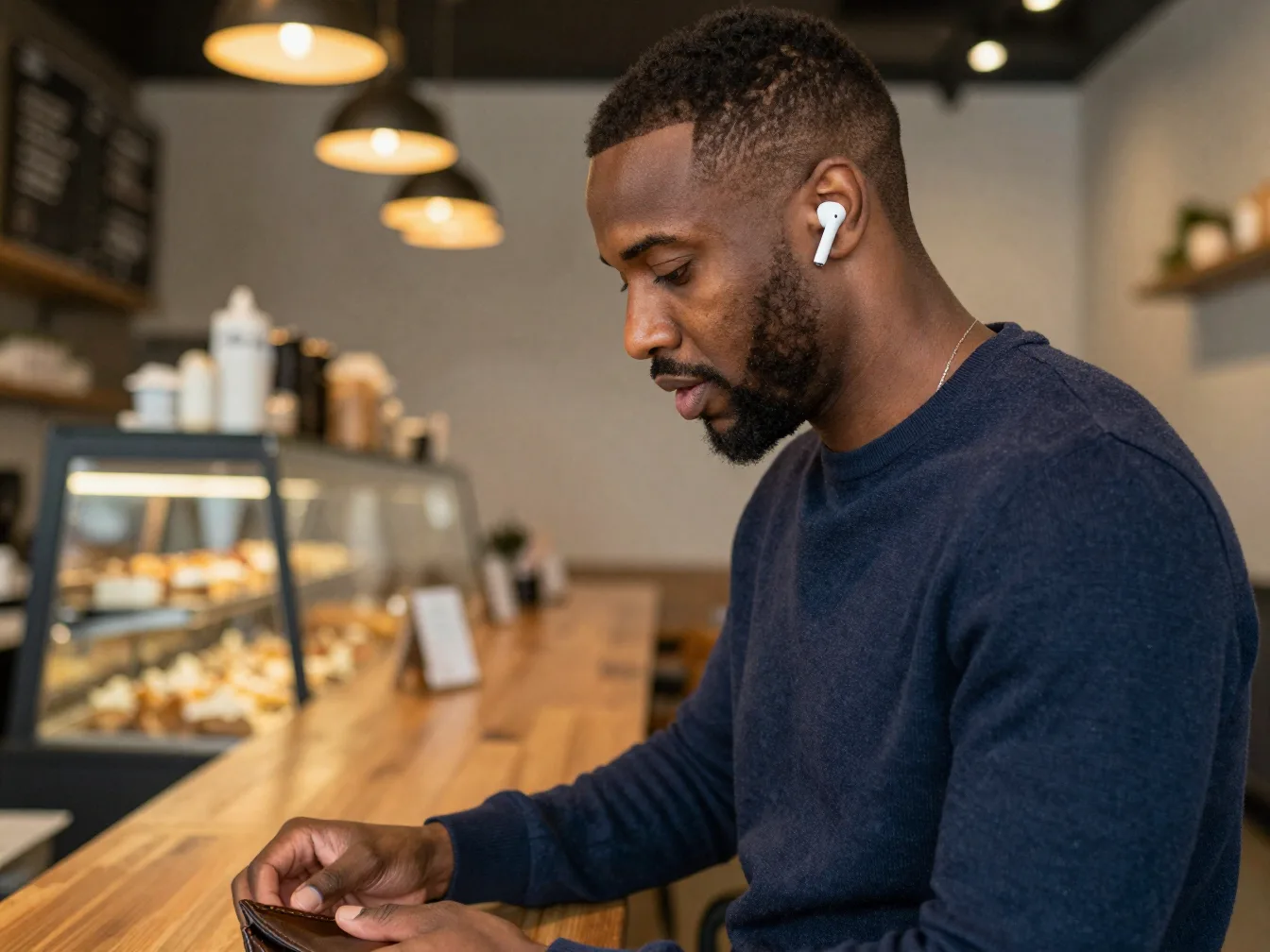
You step up with a bud in one ear and start talking. The barista can't tell whether the words are for him.
Sean Flynn, a former barista who worked six years in Buffalo and Brooklyn, wrote in Food & Wine that customers talking on Bluetooth earbuds leave the order-taker guessing whether he's being addressed or some aunt on the line is. Coleman makes the same point: nobody can tell if you're on a call or just wearing them out of habit. Her fix is to take one out.
An earbud with nothing playing means nothing, but the barista can't know that. Does yours come out before your first word, or after?
A call you walked in with versus one that rang
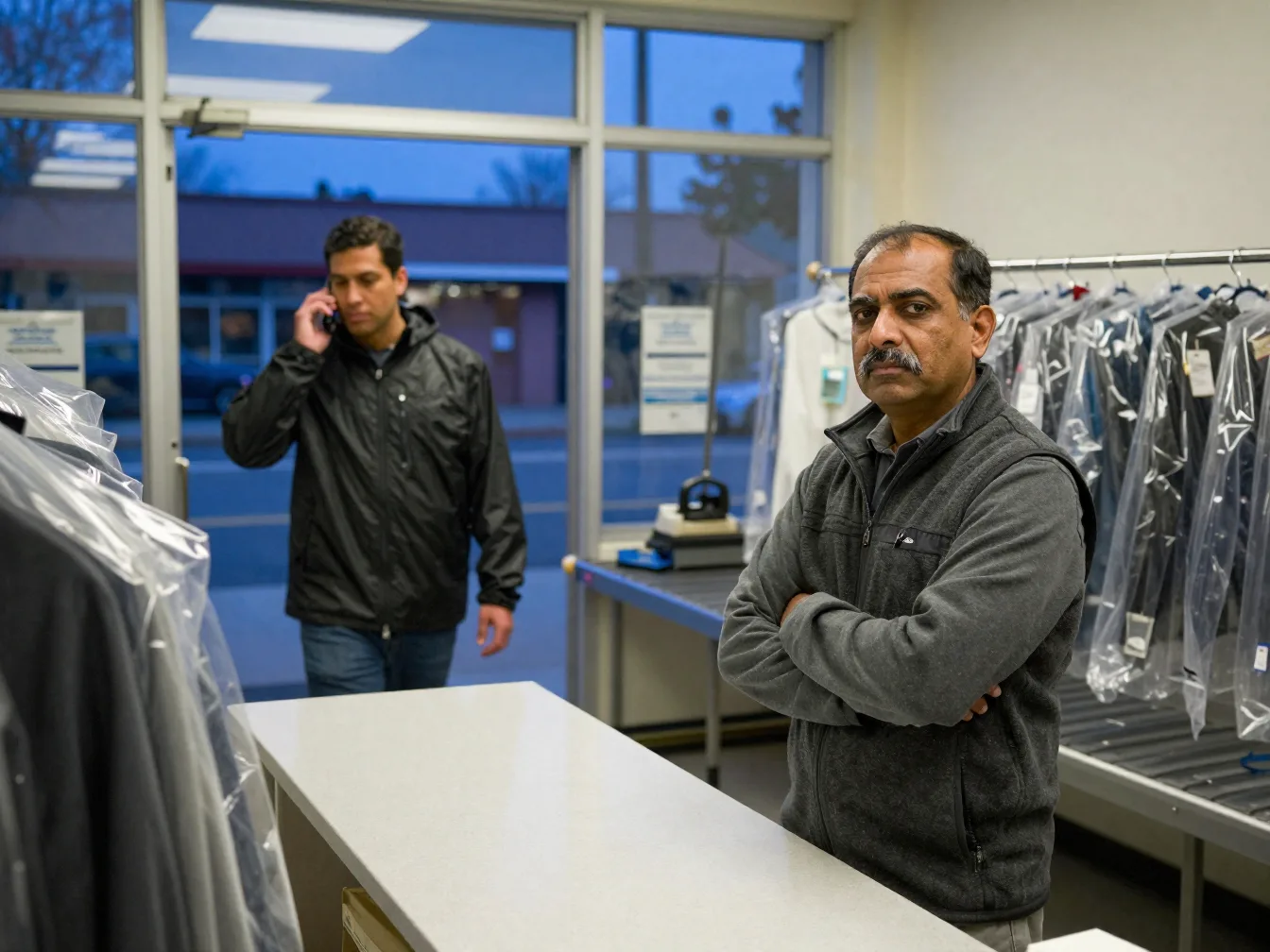
Some customers come through the door already talking. Others get a call while the card is in the reader.
Bob Phibbs, a retail consultant and sales trainer, sorts phone customers on his business blog into the deliberate, on the call from the moment they enter; the accidental, who just realized where they are; the interrupted, whose phone rang mid-sale, maybe about a sick child; and the time-pressed. Most, in his view, are accidental or interrupted. That's his opinion, not a count.
His line to staff: "They generally aren't doing it to upset you – it just feels that way at times." Which kind are you, most days?
Saying nothing about the call
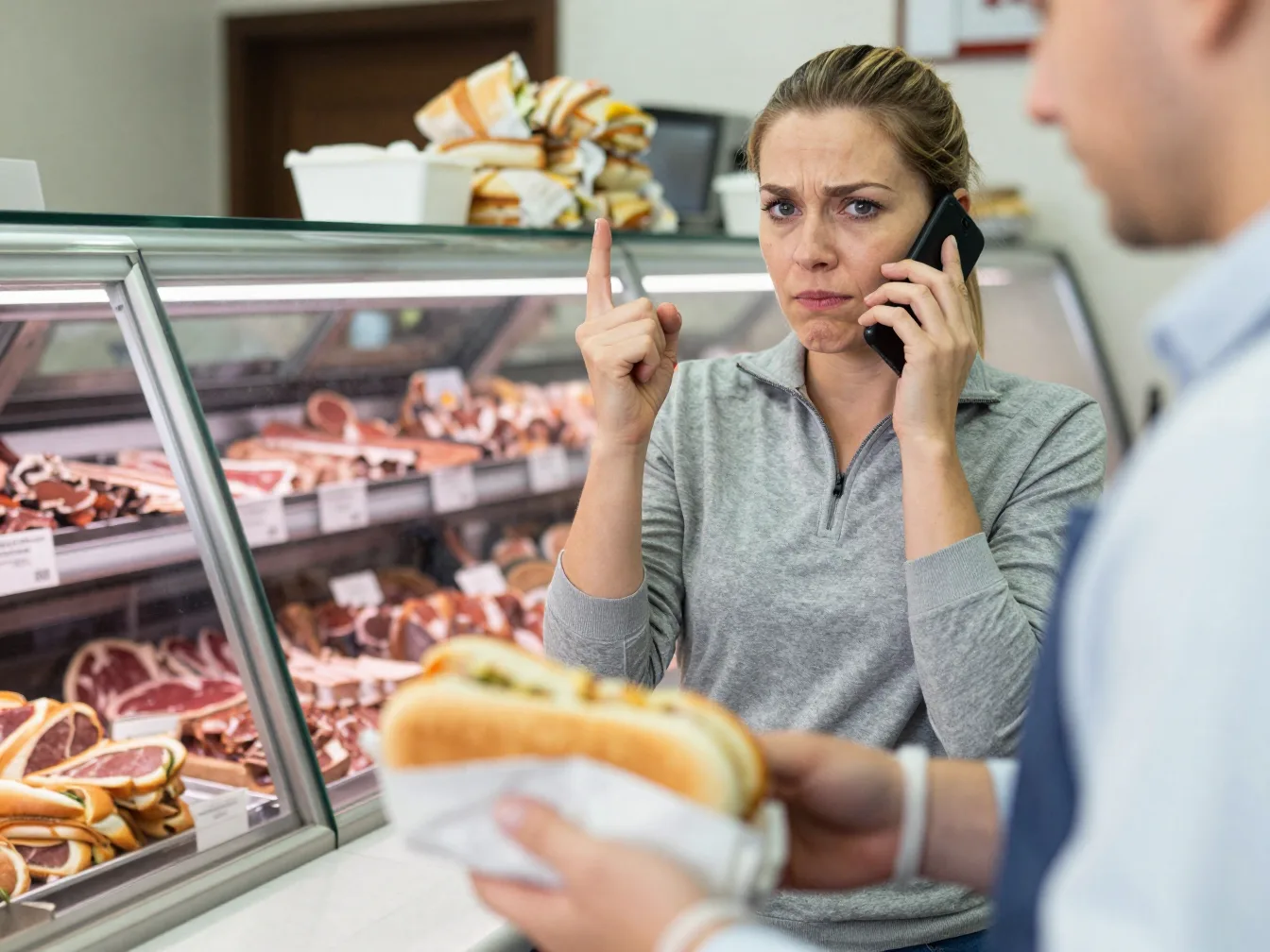
Sometimes the call can't end. A mouthed sorry, a raised finger, a whispered word that you'll be right with her: any of these shows the cashier you know she's there.
Phibbs's advice to staff covers that moment. When an accidental caller seems to be asking forgiveness, the suggested reply is to tell the caller not to apologize, because it happens all the time. Coleman calls it basic courtesy: acknowledging the person helping you.
That second of acknowledgment is probably what separates the caller who gets waved off with a smile from the one who simply carries on. When did you last say anything to a cashier about the call you were on?
The order given in pieces between sentences
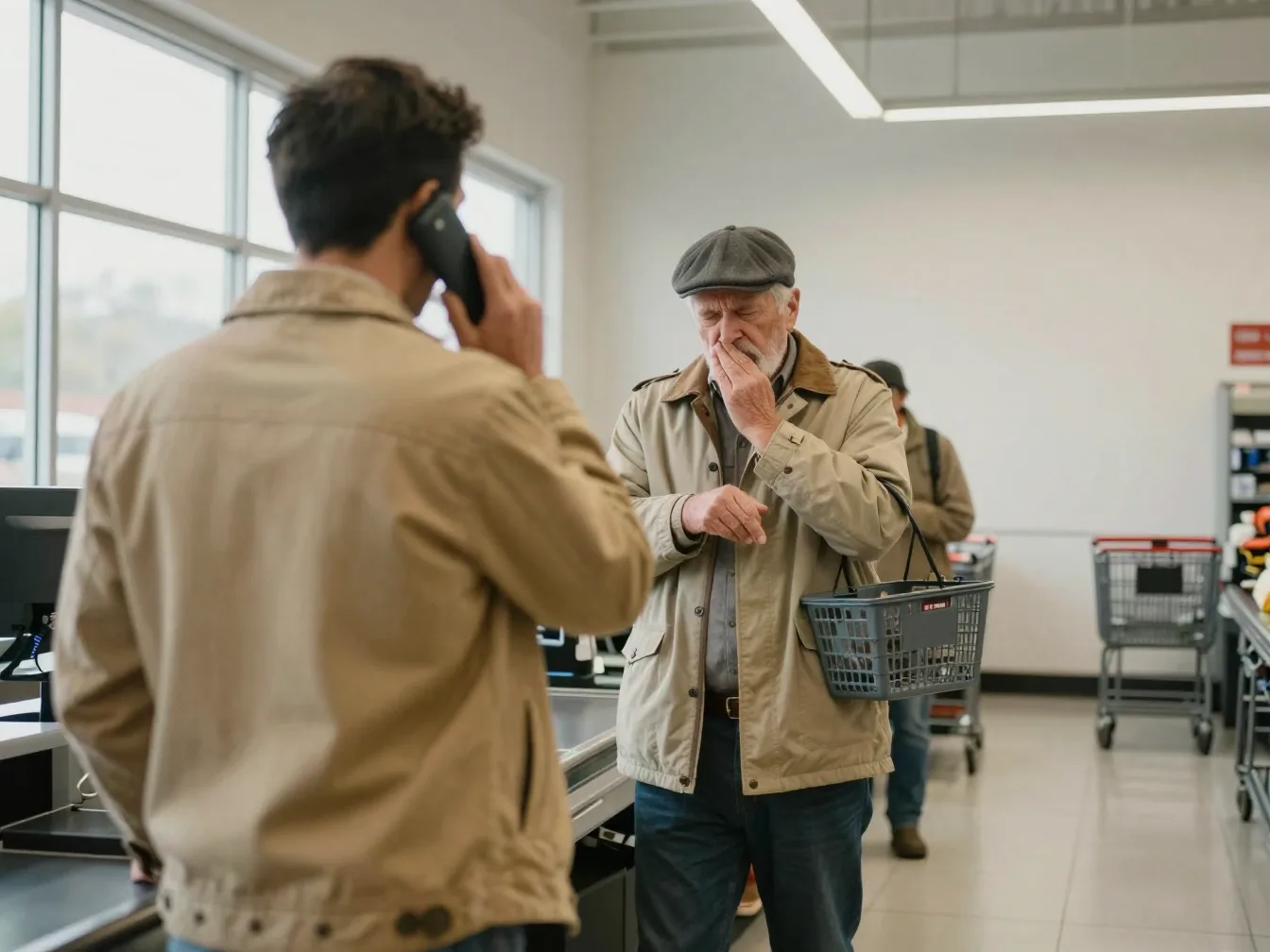
The person behind you shifts their weight, sighs, then drifts to another register.
Flynn writes that he can't count the customers who came up on their phones and barked orders at the cashier. He describes one woman on a call who couldn't decide what she wanted because her attention was split, while the line waited. It probably saved nobody time, he figures. That's one barista's memory, and the call may have mattered a lot to her.
An order given half-listening is the one most likely to be repeated or changed after the cashier starts ringing. Did anyone behind you sigh, shift or switch lines?
The phone held over the card reader
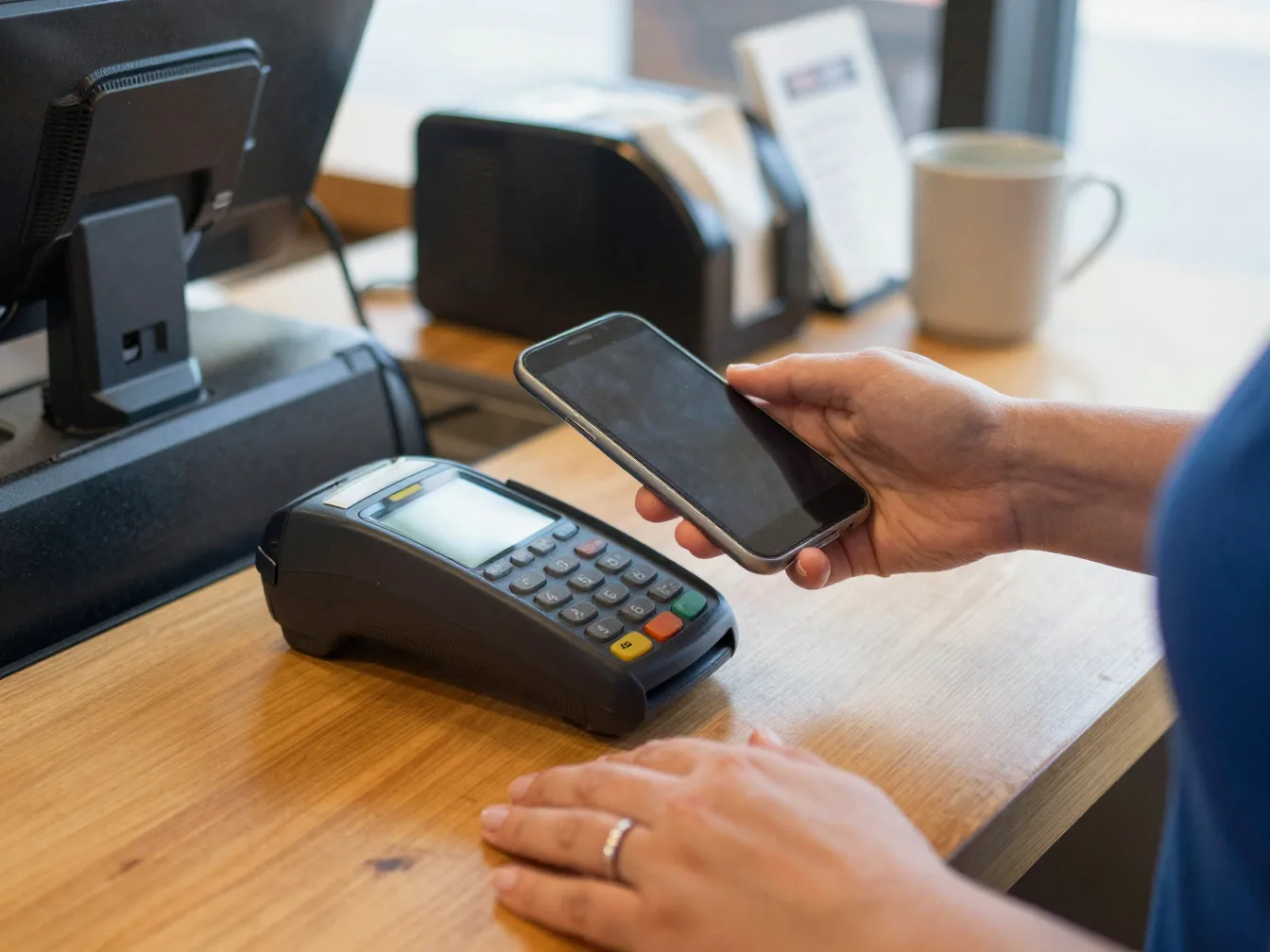
Plenty of screens at the counter are the wallet: tap-to-pay, a loyalty code, a coupon, the list someone at home sent.
From behind the counter, a screen that pays and a screen that distracts look identical. The cashier sees where your eyes are and whether you're talking to her. That's about it.
A few words close the gap. Saying you're paying with your phone, or looking up and nodding while the code loads, makes the screen part of the sale. Check what was actually open the last time you held it up at a register.
What the cashier's smile can't tell you
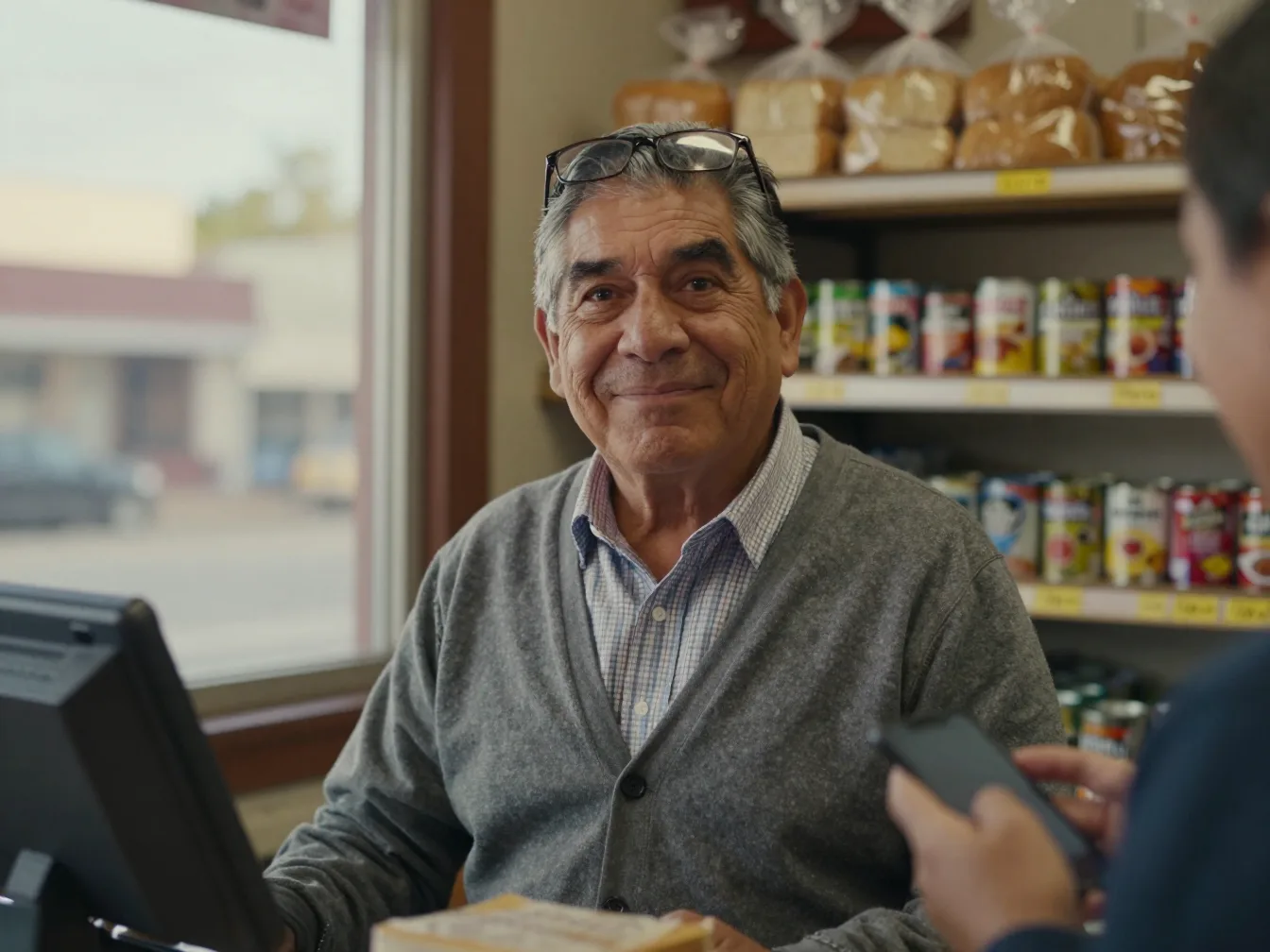
A friendly cashier proves nothing either way. In Fellesson and Salomonson's survey, the more service-minded employees were more forgiving and less likely to confront anyone, so a pleasant face can sit over irritation. None of the research here measured what a particular American cashier concludes about a particular customer.
The line itself is lenient. In Pew Research Center's 2015 survey, 74% of Americans called using a cellphone while waiting in line generally acceptable.
What's left is the few seconds at the front: pause the call, take the earbud out before you speak, and if it can't wait, say one sentence to the person ringing you up.