How People Decide Whether You're Easy to Push Around
Saying yes the first time you're asked

A customer walks onto the lot, looks at one car and buys it at or near sticker. Mark McDonald, a car salesman since 2005, wrote in a 2013 Motor Trend column that salesmen call that buyer a Laydown, or Flopper. Many of them, he adds, are capable people, doctors and business owners among them, who would rather pay a little more than haggle for four hours.
A fast yes gets read another way too. Christopher Voss, a former lead international kidnapping negotiator for the FBI, said in a 2017 talk reported by CNBC that people often say yes just so you'll leave them alone. He calls it a counterfeit yes.
On your last big purchase, did you agree before anyone asked twice?
Telling a seller you need to think about it

You stand up from the desk and say you need to think about it. McDonald, in a 2014 Motor Trend column, calls this one of the first lessons of the job: "think about it" doesn't really mean "think about it." It usually means the customer has decided not to buy and feels awkward saying so. So the salesman keeps asking why.
That awkwardness is ordinary. Vanessa Bohns, a Cornell professor, told NPR in 2022 that saying no is really hard, much harder in person than askers realize. McDonald says some hesitation is fine, and the buyer can always leave.
Last time you said it, did you walk out, or stay and end up explaining?
Requests that come without a way out
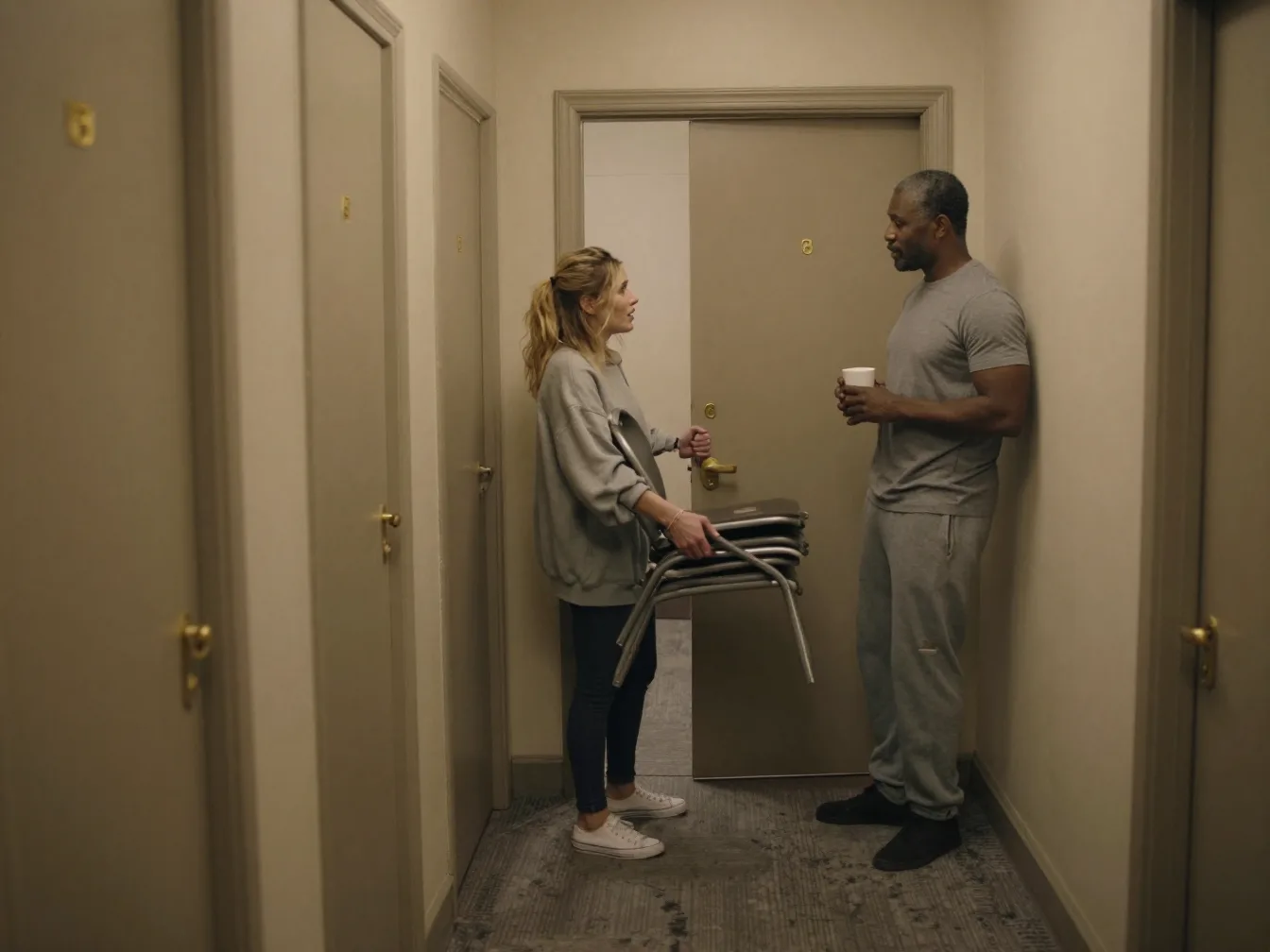
Scroll the last ten requests in your texts and count how many offered an out. Some come padded with no worries if not. Others arrive settled: I put you down for Saturday. People who expect a refusal tend to leave room for one. People who don't, send a plan.
The count proves less than it seems. In six studies, Flynn and Lake (Journal of Personality and Social Psychology, 2008) found people underestimated by as much as 50% how likely others were to agree to a direct request for help. Askers gave little weight to how hard refusing is. So an ask with no out is common, and from close friends it can mean they trust you to say no.
The extra jobs that land on your desk at work

A deadline lands and the manager scans the room. The person who absorbed the last extra job tends to be asked first.
Alison Green, author of Ask a Manager, answered a reader in The Cut who kept covering several people's jobs. People gladly take you up on an urge to help, she wrote, and that helps the employer only in the short term; if you do it all, the problem never feels urgent to them. Her wording: your plate is already full, or taking on X means stopping Y.
List what you do outside your job description, and how much began as just this once. Some extra work gets people noticed, though, and short-staffed teams pile it on everyone.
Taking the first number you hear

The seller names a price and waits to see what you do with it. In three negotiation experiments published in 2001 in the Journal of Personality and Social Psychology, Galinsky and Mussweiler found that whichever side made the first offer came out ahead, and the opening number strongly predicted the final price. The edge disappeared when the other side focused on its own target, or on the opening party's alternatives or lowest acceptable price.
Taking the first number can be a choice. McDonald's Laydowns usually pay full sticker or close, and many simply value their time over a small saving. A fair price needs no counter.
On your last rent renewal or used-couch sale, did you counter even once?
Small favors that turn into big ones

It starts with could you just look at my resume? A week later it's could you rewrite it?
In a 1966 experiment in the Journal of Personality and Social Psychology, Freedman and Fraser phoned Palo Alto housewives picked from the phone book. Some first answered a few questions about their soap. Later they were asked to let a team of men into their homes for two hours to classify household products. Over half agreed, against under a quarter of women who heard only the big request. It's one small, old study from one town.
Did your first small yes make the second ask harder to turn down? Some favors between friends should grow.
What you do when someone cuts in front of you

Someone steps in front of you at the pharmacy counter as if you weren't there. Whatever you do next, a look, a word or nothing, happens in front of everyone else in line.
People who watch someone let a thing like that go tend to take it as a guide to what they can try next. This one comes from ordinary experience, with no study behind it, and it's easy to check. The last time someone cut in, did you say anything?
Plenty of sensible people let small things go to avoid a scene. Letting it go is a choice, and one moment in a line says little about the rest of your week.
What these signs can't tell you

Nothing here can show whether anyone has marked you as easy to push. The accounts come from one salesman, one negotiator and one columnist, and the studies are experiments, mostly known from abstracts.
Your own sense of it is a poor gauge too. In the first of four studies (Personality and Social Psychology Bulletin, 2014), Ames and Wazlawek found only a modest link between how negotiators rated their own assertiveness and how their counterparts saw it. Many who came across as about right believed they had pushed too hard.
Bohns gives her students a day to think a request over and answer by email, because no is easier to write than to say. You can ask for that day too.